
Key Takeaways
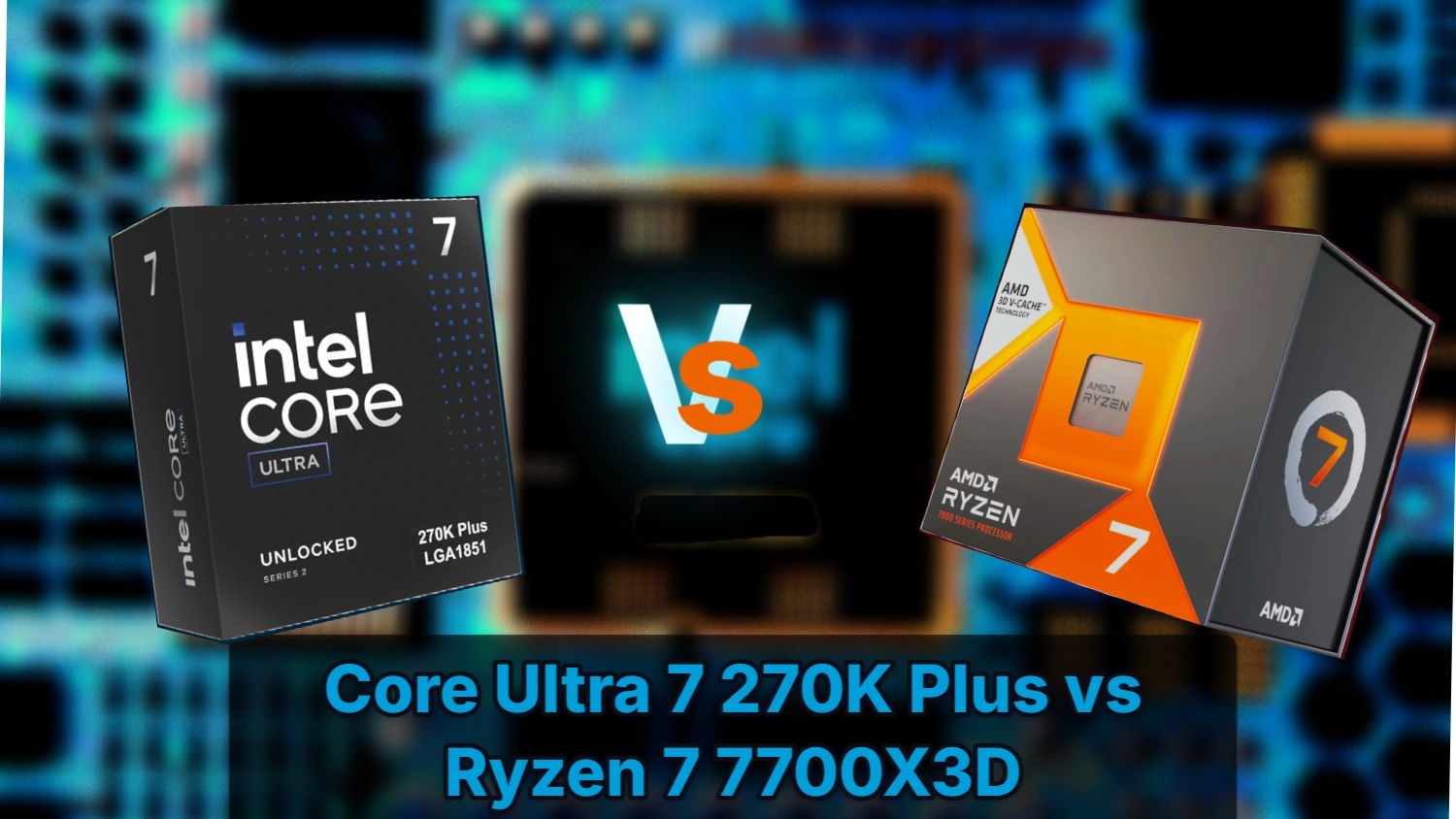
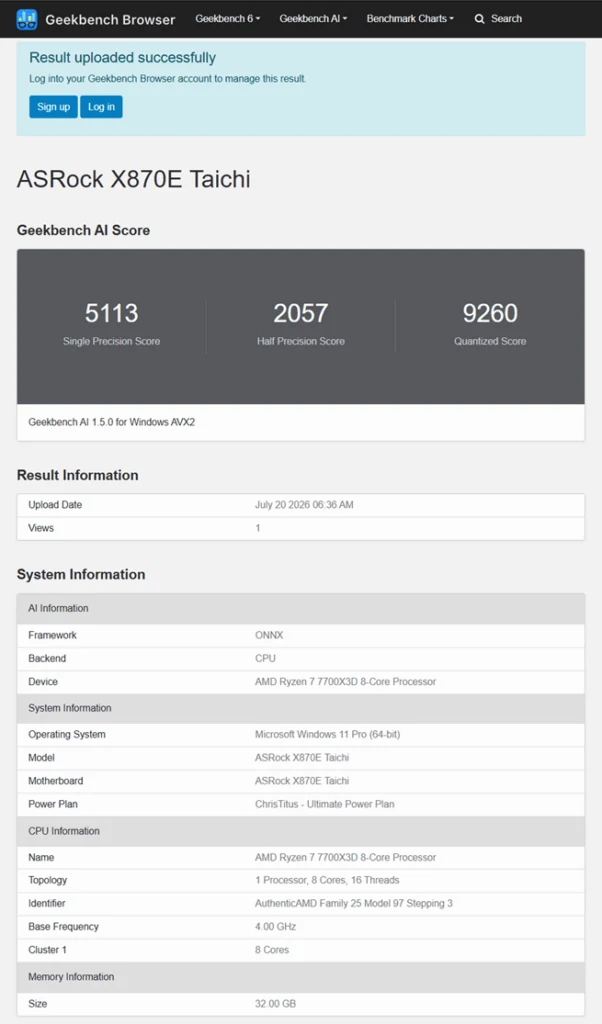
- 1The Ryzen 7 7700X3D draws 60.9 watts gaming against 107.3 watts on the Core Ultra 7 270K Plus, a gap that means a smaller PSU and a quieter cooler for the AM5 build.
- 2LGA 1851 is on its way out, so anyone buying the 270K Plus or Core Ultra 9 285K should plan for a socket swap, not a drop-in upgrade, down the road.
- 3AMD’s own marketing numbers for the 7700X3D in Shadow of the Tomb Raider (332.46 FPS) and Forza Horizon 5 (322 FPS) run nowhere near what Newsbytes.PH measured independently — treat AMD’s slides as a ceiling, not a real-world figure.
- 4Baldur’s Gate 3 is a cache game through and through: the 9950X3D and 9800X3D clear 145+ FPS while the cache-less 9700X manages just 94.
- 5A 32GB DDR5 kit now runs over $400, which can rival the price of the $299 Core Ultra 7 270K Plus itself, budget for memory before the CPU.
- 6The Core Ultra 9 285K’s $589 price tag buys more cores and clocks than the $299-349 270K Plus, but not the newer gaming tuning, and it loses to the cheaper chip in several titles tested here.
- 7For MMOs and strategy games specifically, Final Fantasy XIV, Homeworld 3, Total War: Three Kingdoms, pick the X3D chip; the stacked cache beats fabric tuning every time in this stack.
- 8Hogwarts Legacy and The Last of Us Part 1 favor Intel’s 270K Plus thanks to its iBOT runtime layer and single-thread throughput, proof that no single chip wins every engine.
- 9DOOM: The Dark Ages and Flight Simulator 24 come down to margins under 6 FPS between the 270K Plus and 7700X3D, don’t build a buying decision on either benchmark alone.
- 10The 9950X3D’s RDNA2 integrated graphics matter only for headless render nodes or workstations without a discrete GPU, not for anyone gaming on the $699 flagship.
Table of Contents
- Intel Core Ultra 7 270K Plus: $299 to $349 Buys a Lot of Core
- AMD Ryzen 7 7700X3D: An AM5 Chip Built to Outlast Its Price Tag
- AMD Ryzen 9 9950X3D: $699 for the Chip That Doesn’t Ask Which Job You’re Doing
- Intel Core Ultra 9 285K
- AMD Ryzen 7 9800X3D: The Gaming Ceiling
- AMD Ryzen 7 9700X
- Kingston Fury Renegade 7600MT/s 32GB DDR5
- Black Myth: Wukong: A Rare Dead Heat
- F1 2024
- Forza Horizon 5: Another Gap Between AMD’s Slides and the Track
- Homeworld 3: An RTS That Rewards Cache Over Clocks
- Metro Exodus Enhanced Edition: The Core Ultra 7 270K Plus Sets the Floor at 143 FPS
- Total War: Warhammer 3: A Strategy Title That Picks a Side
- Total War: Three Kingdoms
- Far Cry 6: A CPU Bottleneck Even a Fast GPU Can’t Hide
- Horizon Zero Dawn
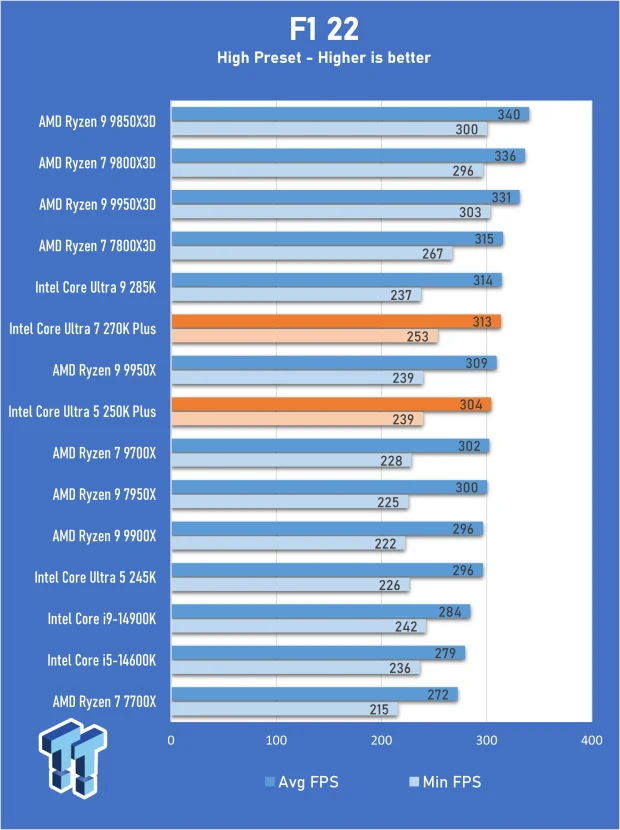
- F1 22: A CPU-Bound Test Even a Modest GPU Can Expose
- The Last of Us Part 1
- DOOM: The Dark Ages: A Statistical Tie
- The Memory Tax Nobody Priced Into Their CPU Budget
- 107.3 Watts Under Load: Intel’s Refresh Runs Hot
Intel Core Ultra 7 270K Plus: $299 to $349 Buys a Lot of Core
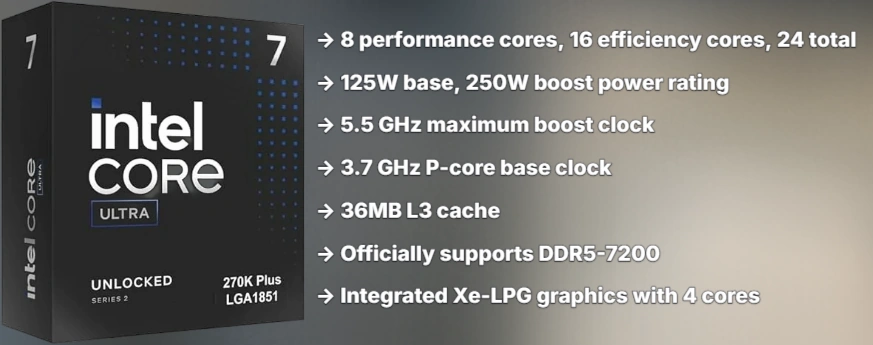
- 8 performance cores, 16 efficiency cores, 24 total
- 125W base, 250W boost power rating
- 5.5 GHz maximum boost clock
- 3.7 GHz P-core base clock
- 36MB L3 cache
- Officially supports DDR5-7200
- Integrated Xe-LPG graphics with 4 cores
The refresh isn’t a new die, it’s plumbing work. Intel pushed the die-to-die frequency up by 900 MHz and the fabric interconnect by another 400 MHz, both of which sit directly on the path between the compute tiles and everything else the chip has to talk to. That’s the kind of change that shows up as lower latency rather than a bigger benchmark bar, and Intel paired it with a Binary Optimization Tool that restructures code at the software level rather than asking the silicon to do more work. Neither change touches the core count or clock ceiling, but together they’re the reason this chip can outrun a part with a bigger name on the box.
LGA 1851 Won’t Be Around Long
Anybody buying into this chip is buying into LGA 1851, and that socket’s road ahead is short. Plan this as a build for today’s performance, not a platform you drop a better chip into three years from now.
Synthetic Benchmarks: Beating Intel’s Own Flagship
Reviewers put the multi-core score between 2,435 and 2,509 and the single-core score between 142 and 145, and across that spread the 270K Plus posted the fastest CPU subscore of any desktop chip tested. That result lines up with the lower latency the interconnect work was supposed to deliver, and it’s the reason this refreshed part comes out ahead of Intel’s own flagship rather than trailing it the way a mid-range chip usually does.
- 179 samples per minute in rendering
- 123 UHD to 1080p60 fps in Handbrake
- 29.9 FPS in a dedicated benchmark pass
- 15,697 PPS throughput
- 179 Compressing GIPS and 200 Decompressing GIPS
- 20,252 CPU index and 17,548 Overall index
- 45,016 composite score
- 68.61 seconds to complete the Handbrake encoding task
AMD Ryzen 7 7700X3D: An AM5 Chip Built to Outlast Its Price Tag

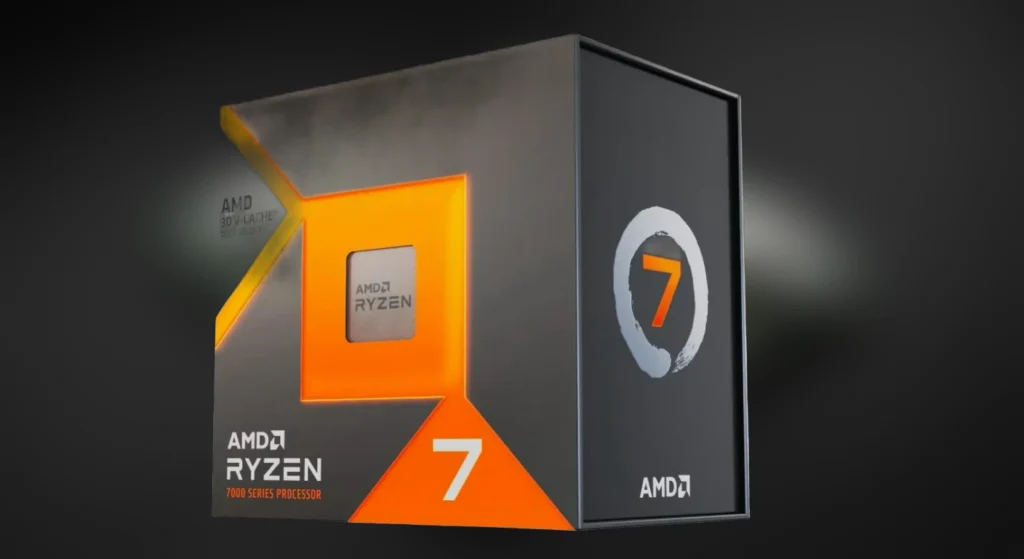
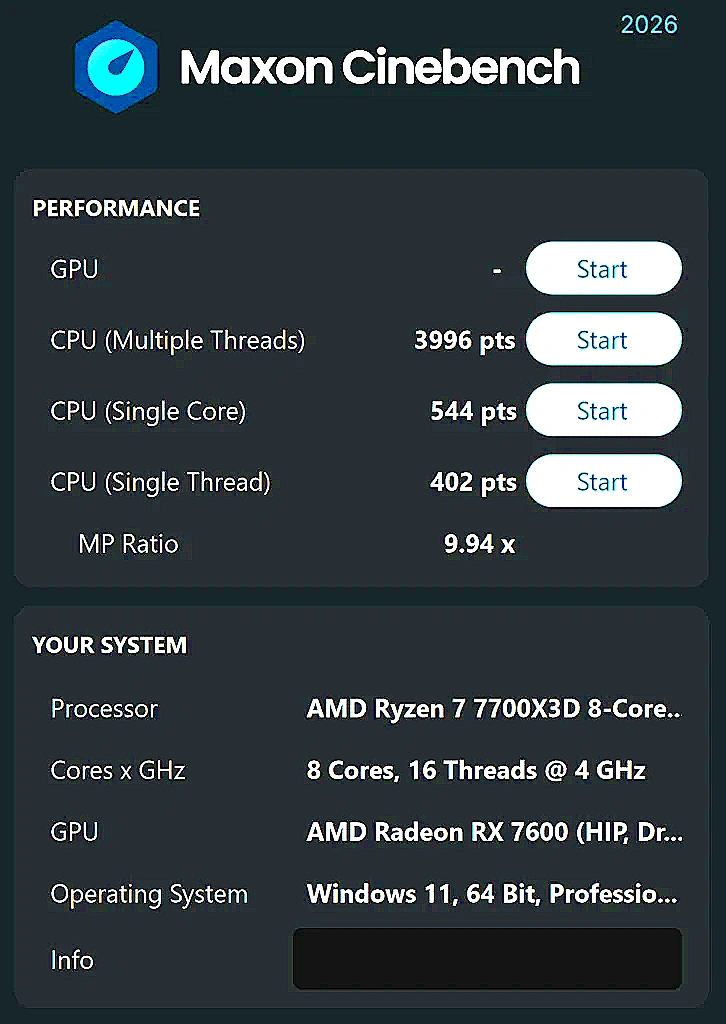
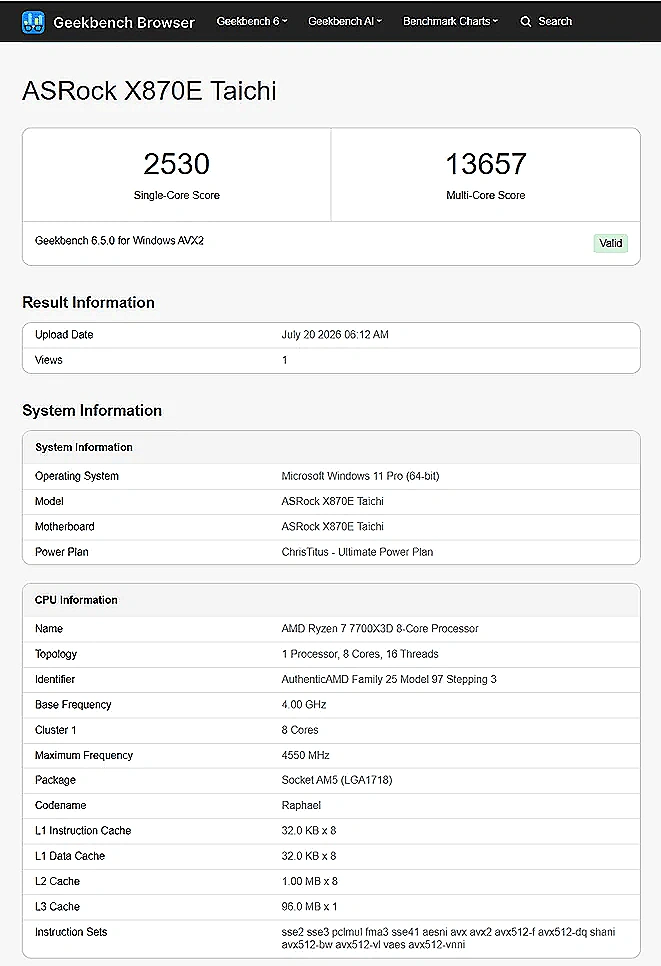
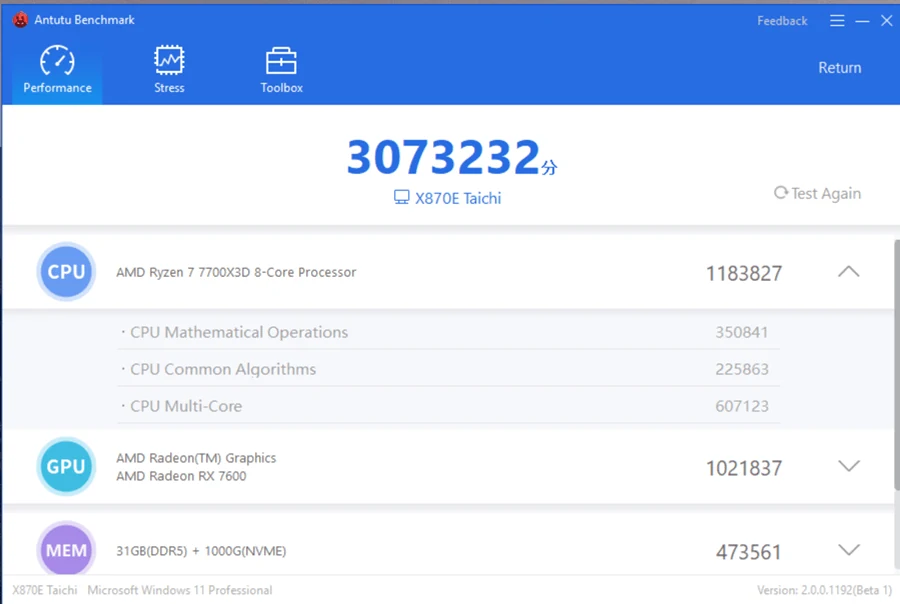
Eight cores and 96MB of L3 cache are the whole story on this chip: the stacked cache is doing more for real workloads here than the clock speeds are. A 4.0 GHz base and 4.5 GHz boost look modest against non-X3D Zen 4 parts, and that’s the tradeoff AMD made to fit the extra cache die under a 120W TDP without cooking it. The integrated Radeon graphics top out at 2.2 GHz, enough to post a display before a discrete GPU goes in, nothing more.
- Cinebench 2024: 1,065 multi-core, 103.8 single-core
- HandBrake: Tom’s Hardware measured 14.3 FPS in encoding
- POV-Ray: 5,823 PPS
- V-Ray: 19,615
- Lame Extended: 91.53 seconds to finish the encode
AMD Ryzen 9 9950X3D: $699 for the Chip That Doesn’t Ask Which Job You’re Doing
AMD Ryzen 9 9950X3D
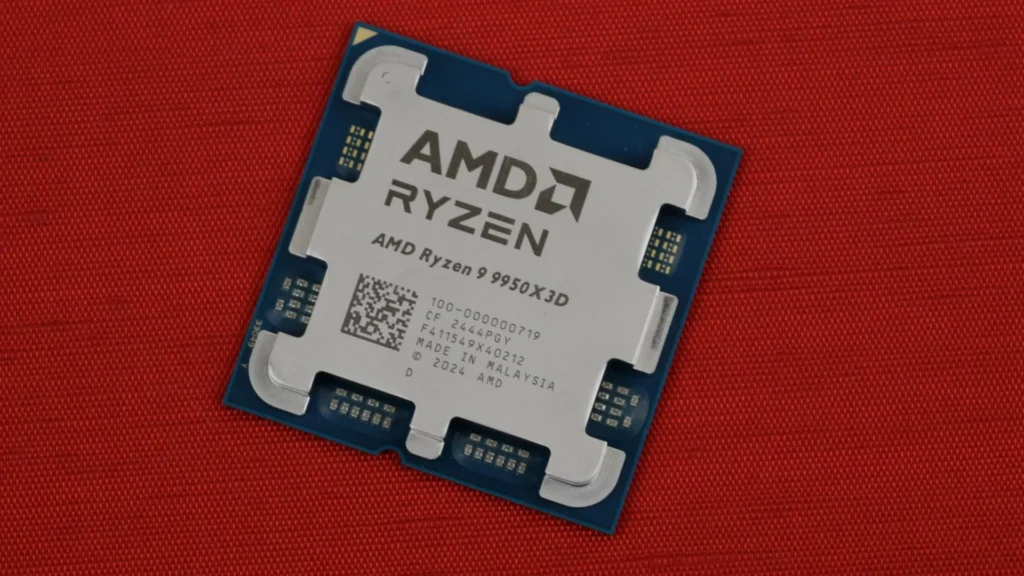
Sixteen cores, one V-Cache die doing the heavy liftingSixteen cores with SMT put thirty-two threads on tap, and PCMag Canada clocked the boost ceiling at 5.7 GHz. The 128MB L3 figure comes from a single 3D V-Cache chiplet stacked on top of one of the two compute dies, not both, which is why this chip behaves like two different processors depending on which cores a game or a render job lands on.
The integrated graphics still run on RDNA2, an architecture AMD shipped in 2020. Nobody buying a $699 flagship is gaming off it, but it matters for anyone building a headless render node or a workstation that needs a display output without a discrete card installed.
Cinebench 2024
7-Zip
3DMark Time Spy
- Blender: 201 samples per minute, a workload that leans on every core the chip has and shows why sixteen of them at 5.7 GHz matters more here than the V-Cache does.
- Handbrake UHD to 1080p60: 134 fps, fast enough to transcode a 4K stream faster than it plays, which is the number that matters for anyone building an encoding or streaming box around this chip rather than a gaming rig.
Intel Core Ultra 9 285K
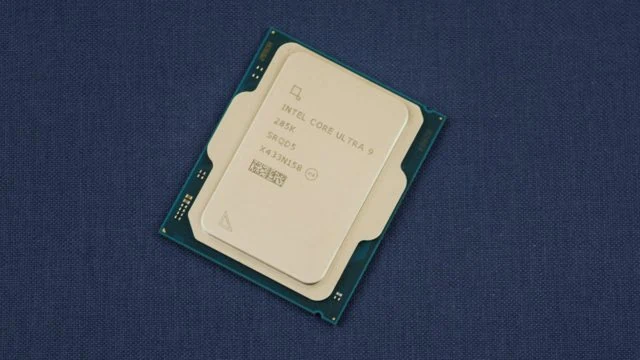
Intel’s flagship tops out at 5.7 GHz turbo and launched at $589, according to PCMag UK, a price that puts real distance between it and the $299 to $349 asked for the 270K Plus covered earlier. That gap buys more cores and higher clocks, not the newer gaming-focused tuning Intel folded into its refreshed parts, so anyone buying the 285K today is paying flagship money for a chip Intel has already moved past on the gaming side of its own lineup.
- Multi-core: 2383
- Single-core: 145
- Blender: 174 samples per minute
- Handbrake UHD to 1080p60: 121 fps
- 7zip compression: 173 GIPS
- 7zip decompression: 195 GIPS
- 3DMark CPU index: 19293
- 3DMark Overall index: 17430
Eight performance cores paired with twelve efficiency cores puts more of this chip’s die budget toward background threads than raw single-threaded muscle, and TweakTown’s bench numbers back that up: a 5.4 GHz max boost that’s a step below what Intel’s flagship parts hit, and 30MB of L3 cache to feed twenty cores total. That cache figure matters because it’s not stacked the way AMD’s X3D parts are, so anyone leaning on it for gaming latency is working with a smaller pool spread across more cores than the 3D V-Cache chips covered elsewhere in this lineup.
| Performance Cores | 8 |
| Efficiency Cores | 12 |
| Maximum Boost Clock | 5.4 GHz |
| L3 Cache | 30MB |
- Multi-core index: 1989
- Single-core index: 135
- Rendering: 146 samples per minute
- UHD > 1080p60 encoding: 115 fps
- Compressing: 159 GIPS
- Decompressing: 165 GIPS
- CPU index score: 18822
- Overall index score: 17377
AMD Ryzen 7 9800X3D: The Gaming Ceiling
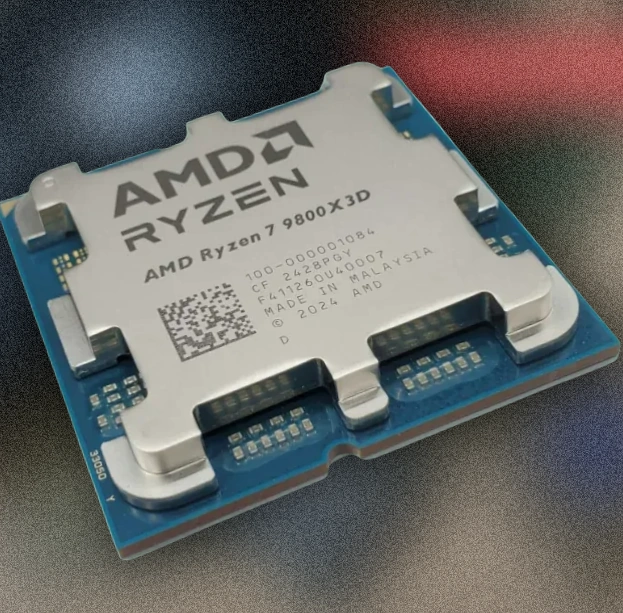
Nobody buys this chip to win Cinebench, and the numbers show it: 1307 in the multi-core run and 133 single-core are respectable but not chart-topping figures for a desktop part in this class. Blender turns in 101 samples per minute and Handbrake transcodes at 92 fps, both solid but not the reason anyone spends this kind of money. Where the chip earns its keep is compression work, 132 GIPS compressing and 141 GIPS decompressing in 7zip, numbers that point at a memory subsystem doing real work rather than raw core count carrying the load. That shows up again in 3DMark Time Spy, where the CPU index hits 16116 and the overall score reaches 17052. Read those two numbers together and the story is a chip whose gaming-oriented cache is dragging the whole system score up even where the CPU subscore alone wouldn’t justify the price.
| Benchmark | Metric | AMD Ryzen 7 9800X3D Score |
|---|---|---|
| Cinebench 2024 | Multi-core index score | 1307 |
| Cinebench 2024 | Single-core index score | 133 |
| Blender 4.2.0 | Samples per minute | 101 |
| Handbrake 1.8.1 | UHD > 1080p60 (fps) | 92 |
| 7zip | Compressing (GIPS) | 132 |
| 7zip | Decompressing (GIPS) | 141 |
| 3DMark Time Spy | CPU index score | 16116 |
| 3DMark Time Spy | Overall index score | 17052 |
AMD Ryzen 7 9700X
No stacked cache sits under this heat spreader, which is the point of the chip: it’s the Zen 5 architecture running without the extra L3 die that defines the X3D parts, so every number below is what the core design does on its own before AMD starts bolting cache onto it. That makes the 9700X the reference point for judging how much of the X3D advantage actually comes from the cache rather than from Zen 5 itself.
- Cinebench multi-core: 1148
- Cinebench single-core: 131
- Blender: 93 samples per minute
- Handbrake UHD transcode: 83 fps
- File compression: 112 GIPS
- File decompression: 131 GIPS
- CPU index score: 13239
- Overall index score: 16437
Kingston Fury Renegade 7600MT/s 32GB DDR5
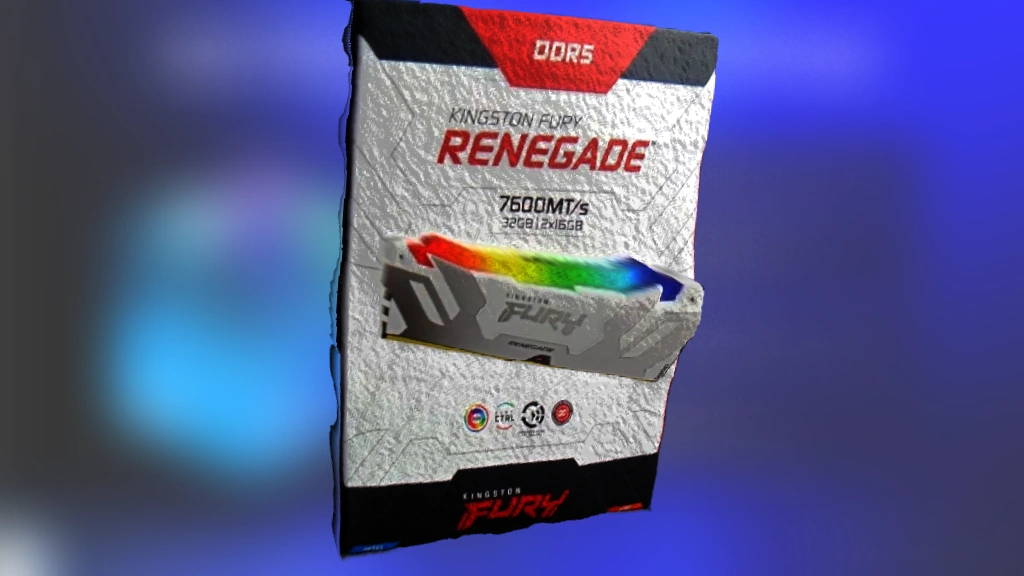
- 7200MT/s: CL38-44-44-105-574-2T
- 7600MT/s: CL38-46-46-105-607-2T
Two 24GB modules make up the kit The FPS Review used to push memory scaling past what a normal DDR5 DIMM can do, a 48GB CUDIMM setup built for the platforms that can actually hold a clock that high.
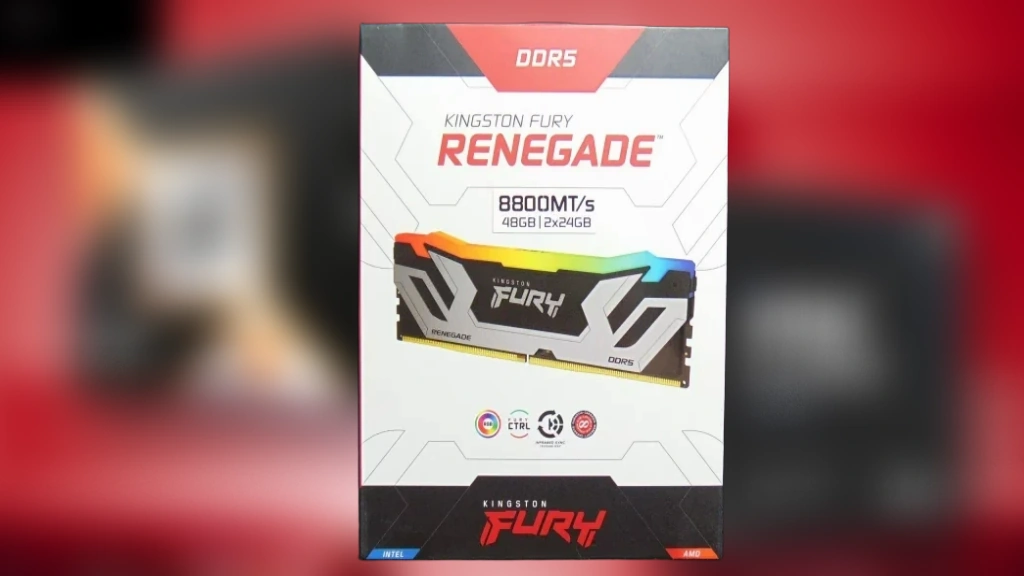
| 8400MT/s Timings | CL40-52-52-132-922-2T |
| 8800MT/s Timings | CL42-58-58-138-927-2T |
Cyberpunk 2077: RT Ultra Still Separates the Field

Cyberpunk 2077 (1080p RT Ultra + DLSS Balanced)
PC Gamer’s numbers at 1080p put all three Intel chips at the top of the chart, 119, 118 and 117 average FPS for the 270K Plus, 285K and 265K respectively, with the 9800X3D and 9950X3D trailing at 112 and 111 and the cache-less 9700X falling to 99. The Core Ultra 7 270K Plus held its edge over the Ryzen 9 9950X across all three resolutions PC Gamer tested, a lead that didn’t depend on a favorable 1080p test bench. But that gap closes as resolution climbs: at 1440p and 4K, where the GPU rather than the CPU starts setting the ceiling, the X3D chips catch up and tie the Intel part instead of trailing it. The 1% low figures tell the harder story for anyone chasing smoothness rather than an average number, 98 for the 270K Plus against 59 for the 9700X, a gap that shows up as stutter in the open world long before the average FPS counter would ever reveal it.
Black Myth: Wukong: A Rare Dead Heat

That 92 FPS figure looks nothing like the numbers AMD published itself. AMD’s internal testing has the 7700X3D averaging 164 FPS in this game, ahead of the non-X3D-adjacent 7800X3D at 161 FPS. A gap that size between a vendor’s own bench and independent numbers is worth noticing before anyone builds a buying decision around either one.
Whatever the source of that discrepancy, the AMD chips and the Intel part being tested essentially tied at 1080p once independent numbers were on the board. Black Myth: Wukong leans hard on DLSS and frame generation, and that kind of upscaling work shifts load off the CPU in a way that flattens differences between high-end parts that would otherwise separate on raw single-thread speed.
Shadow of the Tomb Raider
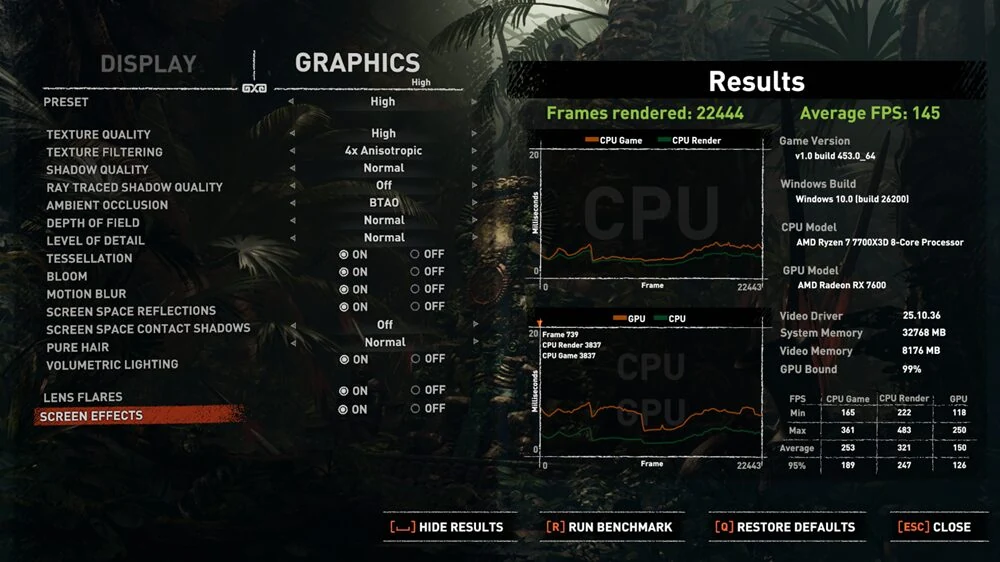
AMD’s own numbers for this game put the 7700X3D at 332.46 FPS and the 7800X3D ahead of it at 359.56 FPS, both figures more than double what Newsbytes.PH measured on the 7700X3D independently. That’s not a small discrepancy to wave off as different test scenes, and anyone using AMD’s marketing slides to size up frame rates in this title should treat them as a ceiling nobody outside AMD’s own labs has reached.
Intel’s own lineup tells a stranger story here: the Core Ultra 7 270K Plus outran the more expensive Core Ultra 9 285K and closed in on the Ryzen 9 9950X’s numbers. That’s a $589 flagship losing ground to the $299 to $349 refresh sitting below it, which makes the 285K a hard sell for anyone shopping this game specifically.
F1 2024
F1 2024
Tom’s Hardware clocked the 7700X3D at 201.8 FPS against 154.7 FPS for the Core Ultra 7 270K Plus, a gap that’s entirely a low-resolution story. AMD’s cache advantage does its usual work when the GPU isn’t the bottleneck, which is exactly the scenario a CPU review is built to expose. Push the resolution up, though, and that gap disappears: the two processors tie once the GPU takes over as the limiting factor, which is the honest reminder that a 7700X3D isn’t going to buy anyone extra frames at 4K if the graphics card is already maxed out.
Forza Horizon 5: Another Gap Between AMD’s Slides and the Track
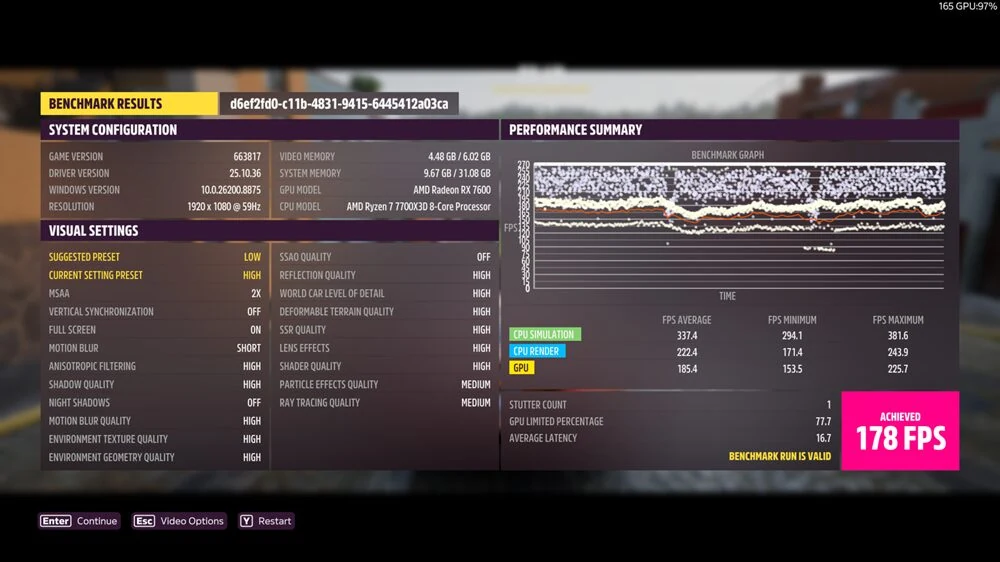
Newsbytes.PH measured the Ryzen 7 7700X3D at a 178 FPS overall average in Forza Horizon 5, a figure that sits nowhere near the 322 FPS AMD’s own internal benchmarks claim for the same chip. AMD’s internal numbers put the 7800X3D ahead of that at 352 FPS, which keeps the two chips ranked the way AMD wants them ranked relative to each other, but the gap to the independently measured figure is now large enough across four separate titles that it looks less like scene selection and more like a pattern in how AMD runs its own tests.
Forza Horizon 5 (AMD Internal Benchmarks)

Baldur’s Gate 3 – Average FPS
Baldur’s Gate 3 – 1% Low FPS
Baldur’s Gate 3 is where the X3D cache stops being a rounding error and starts being the whole game: PC Gamer put the Ryzen 9 9950X3D at 147 average FPS and the Ryzen 7 9800X3D right behind it at 146, both chips clearing every Intel part on the chart by double digits. The best Intel can do is the Core Ultra 7 270K Plus at 113, which is itself worth noting since it beats the more expensive Core Ultra 9 285K at 108 and the Core Ultra 7 265K at 102 – the refresh’s interconnect tuning is doing real work here, not just the flagship’s higher clocks. The Ryzen 7 9700X, running Zen 5 without any stacked cache, lands at 94 FPS, below every Intel chip tested and proof that in this game the extra L3 die is worth more than the architecture generation it’s bolted to. The 1% lows tell the same story with the gap widening: the 9950X3D holds 84 FPS at its worst moments, the 9800X3D holds 76, and every non-X3D chip in the field drops into the 50s and 60s, with the 9700X bottoming out at 56 FPS lows – a stutter gap, not just an average-FPS gap, and the kind of thing a player actually feels during a busy fight in Baldur’s Gate 3’s crowded encounters.
Homeworld 3: An RTS That Rewards Cache Over Clocks
PC Gamer’s Homeworld 3 numbers put the Ryzen 7 9800X3D on top at 117 average FPS with a 55 FPS 1% low, a clean win over everything else in the stack. Behind it sits a genuine tie: the Intel Core Ultra 7 270K Plus and the AMD Ryzen 9 9950X3D both average 101 FPS, a $699 sixteen-core chip matching a part that costs a fraction of it in this game. The tie breaks in the details, though, since the 270K Plus posts a 57 FPS 1% low against 54 FPS for the 9950X3D, meaning Intel’s cheaper, smaller chip holds its frame times more consistently in an RTS that’s throwing thousands of units at the CPU at once.
Homeworld 3 (1080p Epic) – Average FPS
The rest of the field falls in behind those three, and the order says something about where the improvements actually came from. Intel’s own flagship, the Core Ultra 9 285K, averages 97 FPS with a 53 FPS 1% low, trailing the cheaper 270K Plus despite its higher core count and clock speeds, and the Core Ultra 7 265K sits a step below that at 95 FPS with the same 53 FPS 1% low. The Ryzen 7 9700X closes out the chart at 91 FPS with a 49 FPS 1% low, the worst 1% low of any chip tested here, and the gap between it and the cache-equipped 9800X3D is the clearest evidence in this section that Homeworld 3 leans on stacked cache more than it leans on core count or frequency.
Homeworld 3 (1080p Epic) – 1% Low FPS
Metro Exodus Enhanced Edition: The Core Ultra 7 270K Plus Sets the Floor at 143 FPS
Every chip PC Gamer ran through Metro Exodus Enhanced Edition lands within 7 FPS of each other on average, 149 for the Core Ultra 9 285K down to 142 for the Core Ultra 7 265K, with the 270K Plus, the 9950X3D, the 9800X3D and the 9700X all stacked in between at 143 to 148. That tight spread makes the average column nearly useless for picking a winner, but the 1% lows split the field cleanly: the two X3D chips, the 9950X3D and 9800X3D, both hold 91 FPS at the low end while every non-X3D part on the list, Intel or AMD, sits down at 77 to 79. A 12 to 14 FPS gap in the worst moments of a run is the difference between a stutter a player notices and one they don’t, and it’s the stacked cache doing that work, not the average frame rate the marketing slide would show.
| Processor | Average FPS | 1% Low FPS |
|---|---|---|
| Intel Core Ultra 9 285K | 149 | 79 |
| AMD Ryzen 9 9950X3D | 148 | 91 |
| AMD Ryzen 7 9800X3D | 148 | 91 |
| AMD Ryzen 7 9700X | 146 | 77 |
| Intel Core Ultra 7 270K Plus | 143 | 79 |
| Intel Core Ultra 7 265K | 142 | 78 |
Total War: Warhammer 3: A Strategy Title That Picks a Side
Total War: Warhammer 3 – Average FPS
Total War: Warhammer 3 – 1% Low FPS
PC Gamer’s numbers put all three Intel chips within a single FPS of each other at the top: 174 for the Core Ultra 7 265K, 173 apiece for the Core Ultra 7 270K Plus and the Core Ultra 9 285K, which means the $299 to $349 part is matching a flagship that costs hundreds more in this title. AMD’s stack sits well below all three, with the 9800X3D at 152, the 9700X at 151 and the 9950X3D at 150, a spread tight enough that the extra V-Cache barely separates the X3D chips from the cache-less 9700X here. The bigger split shows up in the 1% lows: every Intel chip holds at 136.9 or 139 FPS, while all three AMD parts land at exactly 79 FPS, a gap that means Total War: Warhammer 3’s engine is leaning on whatever Intel is doing with its interconnect and scheduling rather than rewarding stacked cache the way most other titles in this stack do.
Total War: Three Kingdoms
Intel’s refreshed fabric and die-to-die tuning pays off here again: the Core Ultra 7 270K Plus outran both the Ultra 9 285K and the Ryzen 9 9950X, proof that the interconnect work covered earlier in this article translates into strategy-game frame rates and not just latency numbers on a spec sheet. That win doesn’t touch AMD’s X3D lineup, though. Every stacked-cache chip in the stack finished significantly ahead of the 270K Plus, which is the same story Total War: Warhammer 3 already told: a grand-strategy title with thousands of units on screen leans on cache to avoid stalling out waiting on main memory, and no amount of fabric tuning closes that gap once the X3D die is in the socket.
Far Cry 6: A CPU Bottleneck Even a Fast GPU Can’t Hide
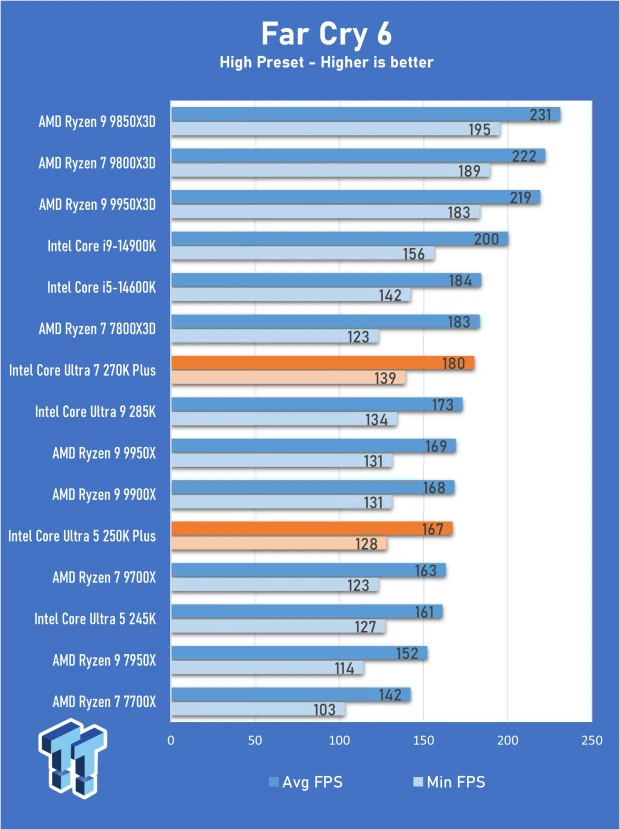
The fabric and die-to-die tuning covered earlier in this article shows up again here: the Core Ultra 7 270K Plus edges out the previous generation, but it’s a small step rather than a leap. That small step doesn’t close the gap with AMD’s stacked-cache parts, which hold a significant lead in TweakTown’s numbers regardless of how much Intel tightened its interconnect. Anyone shopping on Far Cry 6 frame rates specifically should be looking at the X3D column first, not the Intel refresh.
Horizon Zero Dawn
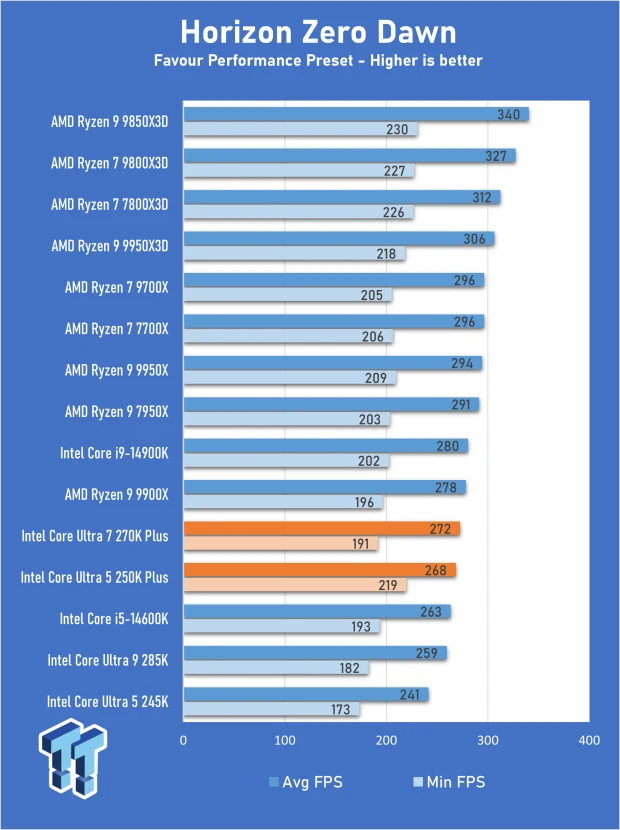
TweakTown’s Favor Performance numbers put the Core Ultra 7 270K Plus a decent step ahead of Intel’s own flagship, the 285K, the same fabric and die-to-die tuning covered earlier in this article doing its usual work. None of that closes the real gap in this game, though. AMD’s X3D chips stay well ahead of both Intel parts, and Horizon Zero Dawn joins Far Cry 6 on the list of titles where the stacked cache does more for frame rate than anything Intel has tuned into its interconnect.
F1 22: A CPU-Bound Test Even a Modest GPU Can Expose
Minecraft RT
Minecraft’s ray-traced path tracing is one of the few workloads in this stack where the gap isn’t a matter of a few frames either way: Tom’s Hardware clocked the Ryzen 7 7700X3D at 144.5 FPS against 89.7 FPS for the Core Ultra 7 270K Plus. That’s not the fabric and die-to-die tuning Intel leaned on elsewhere in this article closing a small deficit, it’s a chip built around stacked L3 cache running away with a workload that leans hard on exactly what that cache is good at. Anyone building specifically around Minecraft’s RT path tracing is looking at the X3D chip as the only sensible pick, not a marginal preference.
Final Fantasy XIV is an MMO, and MMOs live on cache the way strategy titles do: lots of on-screen entities and UI overhead that a bigger L3 pool absorbs better than raw clock speed. Tom’s Hardware measured the Ryzen 7 7700X3D at 177.7 FPS against 146.0 FPS for the Core Ultra 7 270K Plus, a gap of over 30 FPS that puts this game in the same camp as Homeworld 3 and Total War: Three Kingdoms, where the stacked cache does work the fabric tuning covered earlier in this article can’t answer. Anyone who spends serious hours in Eorzea is better served by the X3D chip here, full stop.
Final Fantasy XIV
Counter-Strike 2
Counter-Strike 2 is the kind of workload the X3D cache was built for: light on GPU load, brutal on cache hit rates as thousands of hitscan calculations and player models get juggled every frame. The Ryzen 7 7700X3D pushes 707.9 FPS here against 660.0 FPS on the Intel Core Ultra 7 270K Plus, and for anyone chasing every frame a high refresh monitor can display, that’s the chip to build around.
Hogwarts Legacy (1080p)
Hogwarts Legacy hands the win to Intel: the Core Ultra 7 270K Plus posts 135.3 FPS against 124.0 FPS on the Ryzen 7 7700X3D. That’s Intel’s iBOT runtime translation layer doing its job, a piece of software plumbing built specifically to handle how this engine compiles shaders and dispatches draw calls on the fly, and it’s the reason the fabric and die-to-die tuning covered earlier in this article isn’t what’s carrying the result here. AMD’s cache advantage, so dominant in the strategy titles and MMOs already covered, doesn’t show up the same way in an engine this dependent on runtime translation, and that’s worth knowing before assuming X3D wins every game on the chart.
The Last of Us Part 1
The Core Ultra 7 270K Plus posted 175.6 FPS here, and Tom’s Hardware put Intel’s lead at six percent over the field. That’s a modest margin next to the doubled-up gaps this stack has shown in cache-hungry titles, which points to a game that leans on single-thread throughput and driver overhead rather than raw L3 capacity. Six percent isn’t a reason to pick a platform on its own, but it’s one more data point that this engine doesn’t reward AMD’s stacked cache the way Baldur’s Gate 3 or Homeworld 3 did.
207.2 FPS is what Tom’s Hardware clocked on the Core Ultra 7 270K Plus in Spider-Man 2, comfortably the highest single number this chip has posted anywhere in this stack of games. An open-world title built around swinging through a dense city at speed puts a different kind of load on a CPU than a strategy game or an MMO does, streaming geometry and physics calculations continuously rather than leaning on a fat cache pool to absorb bursts, and Intel’s refreshed fabric and die-to-die tuning covered earlier in this article looks built for exactly that kind of steady throughput. Anyone chasing frame rate in this specific game doesn’t need to look past that number to make a decision.
DOOM: The Dark Ages: A Statistical Tie
DOOM: The Dark Ages
DOOM: The Dark Ages doesn’t pick a side: the Core Ultra 7 270K Plus hits 200.4 FPS and the Ryzen 7 7700X3D lands at 200.0 FPS, a gap too small to notice with a controller or mouse in hand. Every other title in this stack has shown Intel’s fabric tuning or AMD’s stacked cache pulling ahead by real margins in one direction or the other, so a dead heat like this one is the exception rather than the rule. Anyone picking a chip off this game alone should look past the frame rate column entirely and decide on price, platform longevity, or whatever else actually differs between these two parts, because the FPS number here won’t make the call for them.
Flight Simulator 24 is a heavier CPU load than most of the titles in this stack, and Tom’s Hardware clocked the Core Ultra 7 270K Plus at 120.5 FPS against 114.9 FPS on the Ryzen 7 7700X3D. Intel comes out ahead on paper, but a gap under 6 FPS at these frame rates isn’t something a pilot panning across a cockpit is going to feel. Either chip clears the frame rate a flight sim needs to stay smooth, and the choice here comes down to price and platform rather than this benchmark.
Flight Simulator 24
The Memory Tax Nobody Priced Into Their CPU Budget
A basic 32GB DDR5 kit now costs over $400, according to Tom’s Hardware, and that number changes the math on every CPU covered in this piece. A $299 Core Ultra 7 270K Plus or a $345 street-priced Ryzen 7 7700X3D stops being the number that decides a budget once the memory it needs costs as much as the chip itself, and anyone pricing out a build this year needs to treat RAM as a line item that can rival the processor rather than an afterthought.
Not every builder is eating that memory tax equally, either. One viewer pointed out that the stacked cache changes what a chip actually needs from its RAM kit, which means the platform-plus-memory total can look different than the sticker prices on the CPUs alone suggest.
Don’t forget that RAM for 7700x3d could be much cheaper than RAM for 270k. Because of 3d cache.
Regional pricing muddies things further. One commenter flagged that in Germany the 7700X3D sells for 345 euros while the older, faster 7800X3D tray part goes for 289 euros, fifty-six euros less for a chip that AMD’s own numbers put ahead of it in game after game covered earlier in this article.
In Germany the 7700X3D goes for 345€ and the 7800X3D tray is 289€. Oh prices.
Pricing anomalies aside, plenty of the pushback in this comment section isn’t about money at all, it’s about what a CPU is even for. Not everyone buying in this price range wants a chip whose entire pitch is frame rate.
A truly versatile CPU is one that can do everything, I wouldn’t just pay for CPU solely for gaming.
One owner’s real-world experience cuts against the efficiency argument entirely. Running Kingdom Come: Deliverance II on a 7700X3D, they saw the kind of swing no chart in this article captures.
In kingdom come 2 at start almost 30 fps difference. And when I don’t need so high fps it increases to 250. Very huge drops for 7700x3d so I prefer consistent fps over efficiency and low power consumption
107.3 Watts Under Load: Intel’s Refresh Runs Hot
That gaming figure isn’t a fluke from a single stress moment either: Tom’s Hardware clocked the same chip idling at 29 watts, well above what a chip doing nothing on the desktop should be pulling. A power supply and cooling loop sized around Intel’s older parts is going to run warmer and louder with this one installed, and that’s before anyone starts feeding it a demanding game. Builders watching the wall meter have noticed the same thing.
It’s nice to see intel is having some competition just don’t like the 270k+ power consumption 100w+ while gaming is really high
Set that against the Ryzen 7 7700X3D, which Tom’s Hardware measured averaging 60.9 watts during the same kind of gaming load, less than two-thirds of what Intel’s refreshed chip pulls. A gap of that size doesn’t just mean a quieter fan curve; it means a smaller power supply, a cheaper cooler, and a case that can stay closed on a hot day. That efficiency margin is also what makes the AM5 socket worth planning around rather than treating as a one-generation purchase.
While both CPUs were trading blows, I would go with the 7700X3D for the platform longevity (upgrade path).
The idle numbers tell the same story: 19 watts on the 7700X3D against 29 watts on Intel’s refreshed part, a gap that adds up over a machine left running all day. It’s a small enough number on its own, but stacked on top of the gaming-load difference it’s the reason AM5 owners keep planning their next CPU swap around the same board and cooler rather than a full rebuild.
I do stay on AM4 platform and keep on using my 32GB memory, and my 5800X3D as long as I can.