
Key Takeaways
- 1AMD’s RX 9050 isn’t sold in North America or Europe at all, only Asia-Pacific, Japan, and Latin America, so most readers can’t buy one even if they wanted to.
- 2TechSpot scored the RX 9050 a 30 out of 100. That’s not a budget recommendation, that’s a warning label.
- 3The RX 9050 loses 22 percent to AMD’s own last-gen RX 7600. Buying new here means buying backward.
- 4It also trails Nvidia’s RTX 5050 by about 20 percent in TechSpot’s testing.
- 5AMD’s own marketing slide claimed 96 fps in Cyberpunk 2077. Tom’s Hardware measured 210.79 fps, over double that. Don’t trust AMD’s own numbers on this one, and don’t rule out a card just because AMD undersold it either.
- 6The RX 9050 does one thing well: Tom’s Hardware clocked 147.1 fps in Apex Legends at 1080p Max, which is fine for an esports monitor if that’s genuinely all you’re doing.
- 7Intel’s Arc B580 sits at $309.99 to $310 with 12GB of memory, four more gigabytes than the RTX 5050 or AMD’s RX 9060 XT offer at their price points. At this tier, that memory gap is the whole argument.
- 8AMD’s RX 9060 XT asks $399 to $400 for only 8GB, more money with no more memory than cards well below it.
- 9Don’t trust the RTX 5050’s $249 to $250 MSRP. Retailers are actually selling it for $320 to $438.
- 10DRAM prices are up 146 percent year-over-year, with SK hynix reporting roughly 60 percent higher average selling prices on its own. That’s why every budget GPU’s real price has drifted upward regardless of what’s printed on the box.
AMD Didn’t Want This Card Reviewed

A company refusing to send review samples usually means one thing: the numbers underneath aren’t going to look good on paper, and the PC hardware crowd read the situation exactly that way.
Jezus AMD asking you not review a product is just straight up embarrassing.
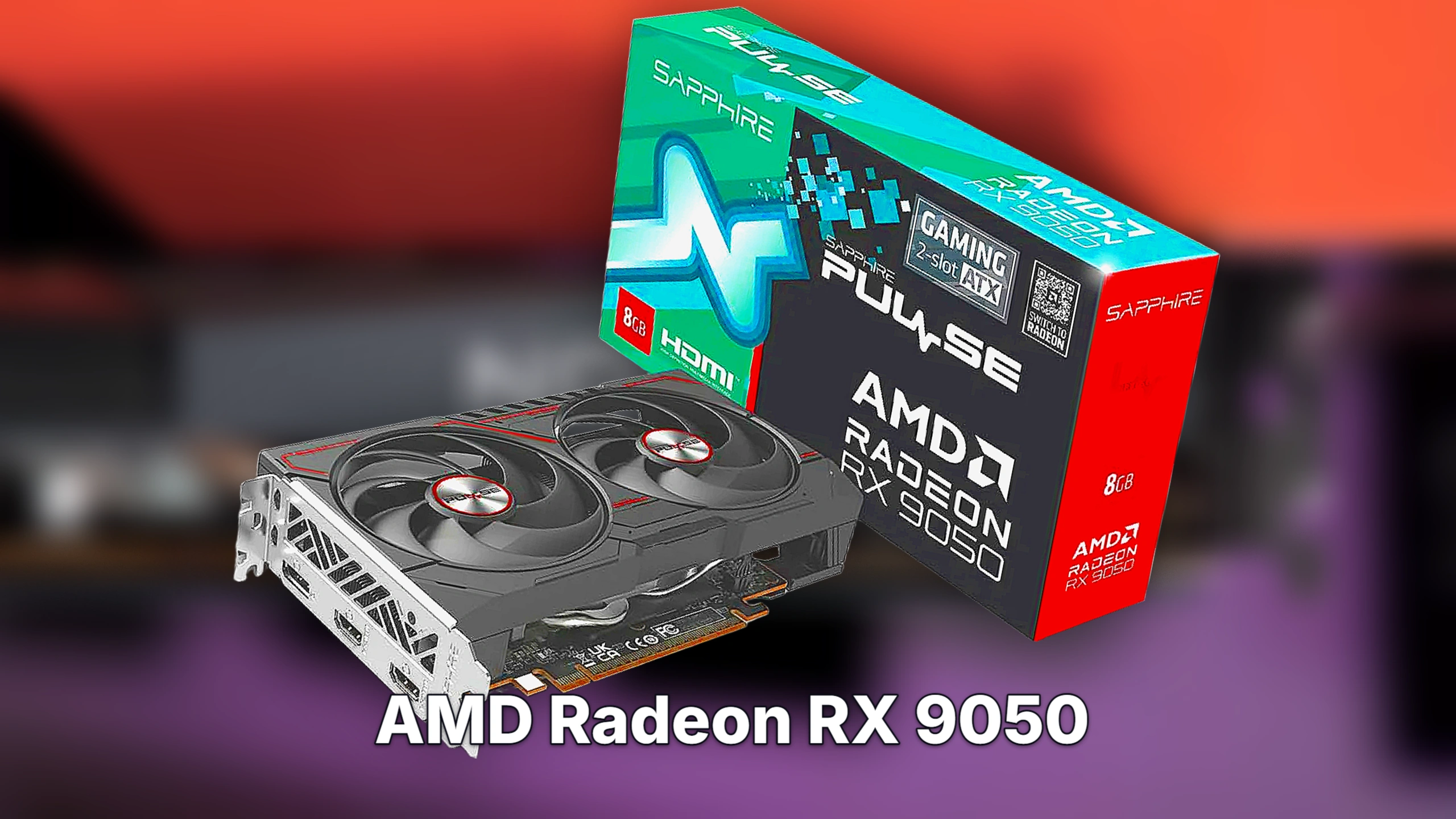
AMD kept the launch out of North America and Europe entirely, restricting the RX 9050 to Asia-Pacific, Japan, and Latin America, with a suggested price sitting between $279 and $280.
A card this cut-down asking near $280 doesn’t read like entry-level pricing to the people who’d actually buy one, and they said so directly.
If this card sold for 149.99 it would a great budget GPU, but not for 279.99, that’s just ridiculous.
Navi 44, Cut Down to Size
| Stream Processors | 1024 |
| AI Accelerators | 32 |
| Ray Accelerators | 16 |
| Memory | 8GB GDDR6 |
| Memory Bus | 128-bit |
| Memory Bandwidth | 288 GB/s |
| Infinity Cache | 32MB |
| Memory Speed | 18 Gbps |
| Game Clock | 1920 MHz |
| Boost Clock | 2600 MHz |
| Display Outputs | DisplayPort 2.1a, HDMI 2.1b |
| Board Power | 92W |
| Recommended PSU | 450W |
AMD’s own boost clock number, 2600 MHz, turns out to undersell the card. TechSpot measured it running between 2.7 and 2.8 GHz in actual games, comfortably past spec, while the hotspot never climbed above 59 degrees Celsius. That’s a chip with thermal headroom to spare, which tracks with a die this small pushing this little power through it.
At a 92W board power rating, the RX 9050 draws 35W less than Nvidia’s RTX 5050 by Tom’s Hardware’s measurements, a real gap for anyone building around a weak PSU or a cramped case. But AMD still bolts on a single 8-pin PCIe connector for a card that sips less power than most monitors, which means anyone hoping to run this off slot power alone is out of luck.
If it was a low profile card ,without requiring 8pin power connection , it would be somehow interesting .
There’s a Second Card, and It’s Worse

AMD didn’t just cut the memory pool for this one, it cut the road that memory travels on. The bus drops from 128 bits to 64, and bandwidth falls with it to 144 GB/s. That’s not a small trim, it’s half the highway, and every texture and frame buffer moving through this card now has half the room to do it in.
Even the Infinity Cache, the on-die buffer that’s supposed to soften the blow of a narrower bus, doesn’t have an agreed-upon size. ThePCEnthusiast puts it at 32MB. Tech Insider says 16MB. Nobody’s pinned down which number is right, and that gap alone tells you how little independent verification this OEM-only part has actually gotten.
None of that ambiguity is an accident of obscurity, it’s the point. This card ships inside prebuilt towers under the same family name as the retail model, aimed squarely at buyers who see ‘gaming PC’ in their budget and never scroll down to the spec sheet to check the bus width or the VRAM.
AMD knows that their 4GB joke of a GPU will be bought by people that don’t pay close attention to the exact specs and just want to buy a “gaming pc” within their budget. Super shameful strategy.
Gaming Performance and Benchmarks
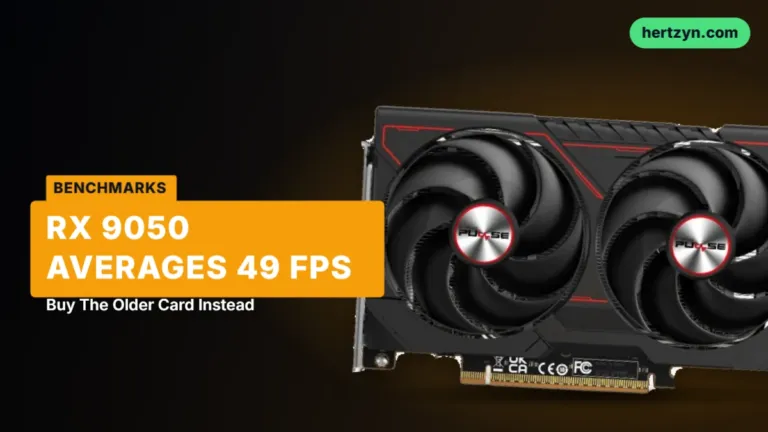
TechSpot’s ten-game average puts this card at 49 fps at 1080p, the resolution it’s supposed to own, and 33 fps at 1440p, a number nobody should be aiming a budget card at in the first place. TechSpot’s final score, 30 out of 100, is what a review looks like when a reviewer runs out of ways to say ‘buy something else.’
Against Nvidia’s RTX 5050 it’s down about 20 percent, which stings but is at least a fight between two current cards. What actually matters is the 22 percent it loses to AMD’s own RX 7600, a card from the previous generation. That’s not a lateral move dressed up as progress, that’s a step backward with a new name on the box.
AMD’s own slide claims 96 fps in Cyberpunk 2077. Tom’s Hardware measured 210.79 fps at 1080p Medium, more than double what AMD was willing to put its name behind. When a company lowballs its own product this hard, it’s usually because the numbers that do look good need to be handled carefully, and the ones that don’t need to disappear.
- Pragmata: 85 fps, AMD’s own figure
- Forza Horizon 6: 130 to 131 fps, AMD’s own figure
- Counter-Strike 2: 227 fps, AMD’s own figure
3DMark Synthetic Benchmarks
There’s one bright spot: Tom’s Hardware clocked 147.1 fps in Apex Legends at 1080p Max, which is genuinely fine for an esports crowd chasing a high-refresh monitor rather than ray tracing eye candy. It’s a narrow lane, but it’s a lane.
Viewers watching the Hardware Unboxed numbers land weren’t shy about saying what they saw: a new card losing to old hardware.
I cannot believe its not even on par with a 3060Ti, we’re truly going backwards.
The Real Reason Your Next GPU Costs More: Memory

DRAM average selling prices are up 146 percent year-over-year, and SK hynix alone reports its own average selling prices climbing around 60 percent. That’s the backdrop against which Nvidia set the RTX 5050’s official MSRP at $249 to $250, a number that was supposed to define the floor of the current GPU generation. It doesn’t anymore.
| Graphics Card | Memory | Price Range |
|---|---|---|
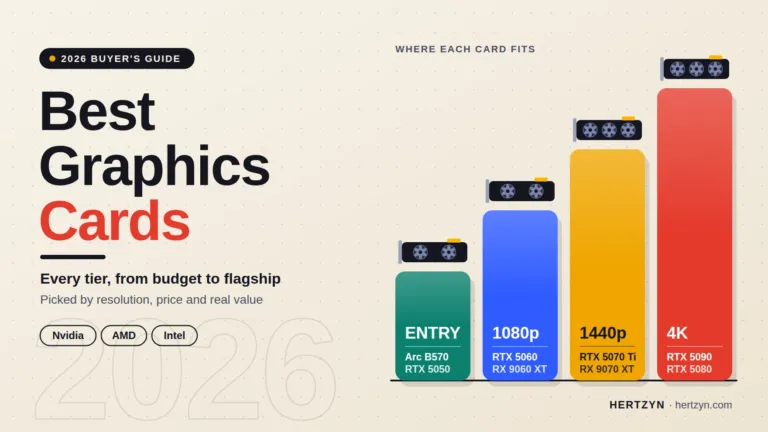
| Nvidia GeForce RTX 5050 | 8GB | $249 – $438 |
| Intel Arc B580 | 12GB | $309.99 – $310 |
| AMD Radeon RX 9060 XT | 8GB | $399 – $400 |
Intel’s Arc B580 sits at $309.99 to $310 and carries 12GB of memory, four more gigabytes than either Nvidia or AMD offer at their own price points. Against a market where memory itself is the expensive part, that’s the card actually worth pointing a budget buyer toward. AMD’s own Radeon RX 9060 XT asks $399 to $400 for 8GB, a step up in price with no step up in memory over the cards beneath it.
None of that MSRP math survives contact with actual shelves, either. Retailers are selling the RTX 5050 for $320 to $438, which puts a card Nvidia priced as entry-level within shouting distance of what used to buy a genuine mid-range GPU.
We’re just getting more fucking squeezed. Day after day.